

Basement design is more than just adding square footage to your home. It’s about creating a space that serves your unique needs, whether that’s a cozy family room, a functional home office, or a vibrant entertainment area.
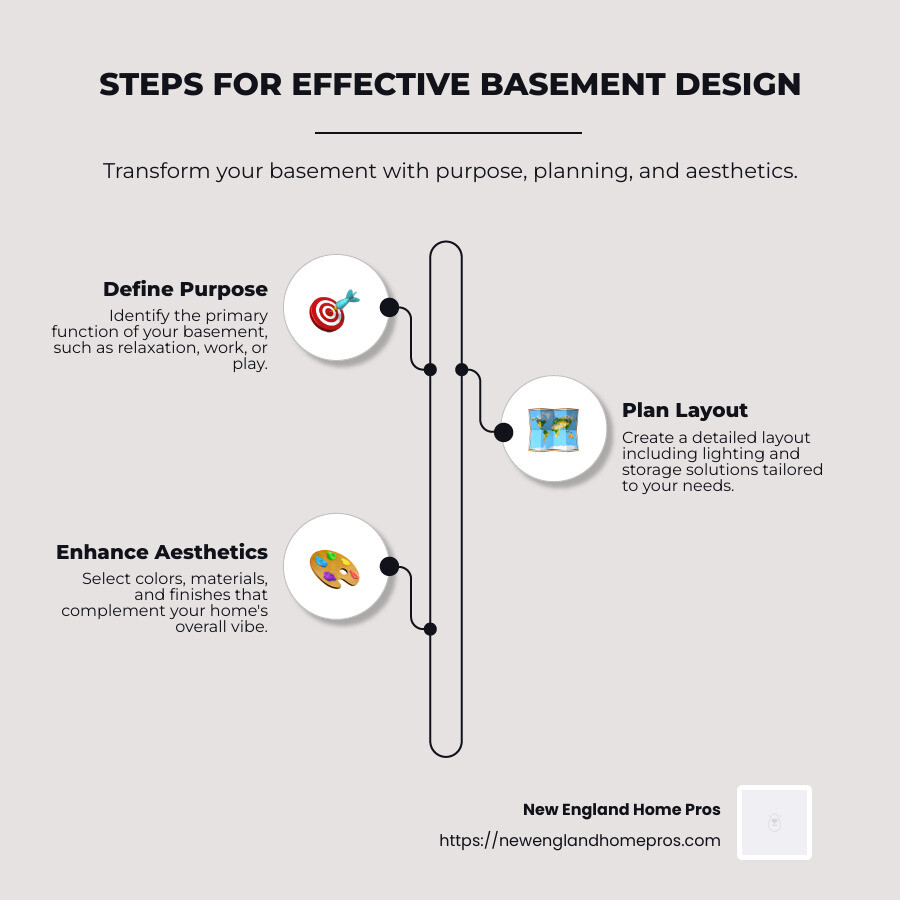
When diving into basement design, consider these key factors:
- Purpose: Identify the primary function of your space—be it relaxation, play, or work.
- Planning: Craft a detailed plan that incorporates the layout, lighting, and storage solutions custom to your needs.
- Aesthetics: Choose colors, materials, and finishes that improve the overall vibe of your home.
As Jesse Andrews, I bring over three decades of expertise in basement design to New England Home Pros. My journey has equipped me with the craftsmanship and insight to transform basements into functional and inviting spaces. This article will guide you through the change process from concept to creation.
Basement design further reading:
– basement finishing
– basement wall ideas
Defining Your Basement’s Purpose
When it comes to basement design, defining the purpose of the space is your first step. This is crucial because the purpose will guide every other decision you make, from layout to lighting. Let’s break it down into three key areas: zones, functional flow, and storage needs.
Zones
Think of your basement as a blank canvas. It’s a large, open space that can be divided into different zones to serve multiple purposes. You might want a cozy reading nook, a play area for the kids, or even a mini gym. By creating zones, you can make the most of your basement’s potential.
Example: Imagine a family that loves to entertain. They might dedicate one zone to a home bar or wine cellar, complete with stylish shelving and a countertop, as suggested by New England Home Pros. Another zone could be a media room with comfy seating and a large screen for movie nights.
Functional Flow
Once you’ve identified the zones, consider the flow between them. You want a layout that feels natural and easy to steer. This means thinking about how people will move from one area to another.
Tip: Use furniture and rugs to subtly define spaces without interrupting the flow. For example, a sectional sofa can separate a living area from a play zone without needing walls.
Storage Needs
Basements are perfect for storage, but you don’t want it to feel cluttered. Built-in shelves and cabinets can help keep things organized while maintaining a clean look. Storage can be both functional and stylish.
Case Study: One homeowner transformed the space under their stairs into a sleek coffee station with built-in shelves. This creative use of space not only provided storage but also added a touch of hospitality for guests.

By carefully considering zones, functional flow, and storage needs, you can design a basement that truly improves your home. Next, we’ll dig into how to create a detailed basement floor plan that brings your vision to life.
Creating a Basement Floor Plan
Designing a basement floor plan is where your vision starts to take shape. It’s all about getting the measurements right, crafting an effective layout, and considering an open design for flexibility.
Measurements Matter
Accurate measurements are the cornerstone of any successful basement project. Before anything else, measure your basement thoroughly. You’ll need to know the dimensions of the entire space, including the height of the ceiling. This helps in planning for headroom and potential installations, like lighting or ductwork.
Pro Tip: Use a laser measure for precision and make note of any irregularities, like support beams or utility areas, which might affect your layout.
Crafting the Floor Plan
Once you have your measurements, you can start creating your floor plan. A good floor plan is a balance between your needs and the space available. Consider where you’ll place walls, doors, and any built-in features.
- Sketch It Out: Start with a simple sketch of your ideas. This doesn’t need to be perfect, just a rough draft to visualize your thoughts.
- Use Software: Many free and paid tools can help you refine your plan. These can offer 3D views, so you can see how your design looks from different angles.
Accept an Open Layout
An open layout can make your basement feel larger and more inviting. This design approach minimizes walls and barriers, allowing for a seamless flow between areas.
- Flexible Spaces: Open layouts offer flexibility. You can easily reconfigure furniture or add new zones without major renovations.
- Natural Light: If your basement has windows, an open layout helps distribute natural light throughout the space, making it feel brighter and more welcoming.
Example: A family in Detroit opted for an open layout with a mix of carpeted and hardwood areas, as highlighted in their basement redesign. This created a versatile space that served as both a play area and a cozy media room.
By focusing on precise measurements, a well-thought-out floor plan, and the benefits of an open layout, you set the foundation for a basement that meets your needs and improves your home. Now, let’s explore how to incorporate the hottest design trends of 2024 into your basement.
Incorporating 2024 Design Trends
As we move into 2024, basement design is embracing new trends that bring style and functionality to these often-overlooked spaces. Let’s explore the top trends: open shelving, statement lighting, and mixed textures.
Open Shelving
Open shelving is a versatile choice that adds both storage and style to your basement. It allows you to display decorative items, books, or even storage boxes in a way that complements your overall design.
- Visual Appeal: Open shelves create a sense of openness and can make even a small basement feel more spacious. They also allow you to showcase personal items that add character to the space.
- Functionality: This type of shelving is not just for show. It provides easy access to items and can be customized to fit awkward spaces or sloped ceilings often found in basements.
Example: A trendy basement in New York used open shelving to store board games and family photos, changing a simple wall into a functional and decorative feature.
Statement Lighting
Lighting is crucial in a basement, where natural light may be limited. Statement lighting fixtures can transform your basement from dark and dreary to bright and inviting.
- Go Bold: Consider oversized pendant lights or a modern chandelier to make a striking impact. These fixtures not only illuminate the space but also serve as a focal point.
- Layer Your Lighting: Combine overhead lights with floor lamps or wall sconces to create a layered lighting effect. This adds depth and warmth, making the space more inviting.
Pro Tip: A musician’s basement sanctuary featured a ceiling light resembling a set of drums, adding both function and a unique touch of personality.
Mixed Textures
Incorporating a variety of textures is a great way to add depth and interest to your basement design. Mixing materials like wood, stone, and fabric can make the space feel cozy and stylish.
- Warmth and Comfort: Use plush rugs, soft throws, and textured pillows to add warmth. This is especially important in basements, which can feel cool or damp.
- Visual Interest: Combine smooth and rough surfaces, like a stone accent wall with sleek wooden furniture, to create a dynamic look.
Example: A basement in Salt Lake City featured a stone fireplace paired with light wood floors, creating a balanced and inviting environment.
By integrating these 2024 design trends into your basement, you can create a space that is both functional and on-trend. Whether you’re looking to add storage with open shelving, brighten the room with statement lighting, or add coziness with mixed textures, these ideas will help you transform your basement into a stylish and useful part of your home. Next, we’ll discuss the cost considerations you need to keep in mind for your basement design project.
Cost Considerations for Basement Design
When planning your basement design, understanding the costs involved is crucial. Here’s what you need to consider:
Renovation Costs
Renovating a basement can be a significant investment, but it’s one that can add substantial value to your home. On average, basement renovations can range from $10,000 to $50,000, depending on the size and complexity of the project.
- Basic Remodel: Includes essential updates like flooring, painting, and basic lighting. This can cost around $10,000 to $15,000.
- Mid-Range Remodel: Adds features like a bathroom, improved lighting, and some custom built-ins. Expect costs between $20,000 and $35,000.
- High-End Remodel: Involves luxury finishes, a full bathroom, or a home theater. These can exceed $50,000.

Budget Planning
Setting a clear budget is vital. Start by listing all potential expenses and prioritize your needs. This will help you avoid overspending and ensure you get the most out of your budget.
- Prioritize Needs: Decide what features are most important, such as a new bathroom or a home office.
- Include Contingency: Set aside 10-20% of your budget for unexpected expenses.
Example: A family in Manchester, NH, planned their basement remodel with a $30,000 budget. They prioritized adding a bathroom and a small kitchenette, enhancing the space’s functionality.
Material Prices
Material costs can vary widely, impacting your overall budget. It’s important to choose materials that fit both your design vision and your financial plan.
- Flooring Options: Vinyl and laminate are cost-effective and moisture-resistant, while hardwood or tile can be more expensive.
- Wall Finishes: Drywall is standard, but alternatives like wood paneling or stone veneer can add character for a higher price.
- Lighting Fixtures: Basic fixtures are affordable, but statement pieces can add to the cost.
Pro Tip: Opt for materials that are durable and moisture-resistant, especially for basements, which are prone to dampness.
By carefully considering these cost factors, you can create a basement design that is both beautiful and budget-friendly. In the next section, we’ll tackle common questions about basement design, including waterproofing and obtaining necessary permits.
Frequently Asked Questions about Basement Design
When it comes to basement design, several common questions arise. Let’s address some of these to help you steer your basement project with confidence.
How can I design a basement?
Designing a basement involves several key steps:
- Waterproofing: Before any design work begins, ensure your basement is dry. Waterproofing is crucial to prevent future moisture issues. Consider systems like sump pumps and drainage solutions.
- Permits: Always check with your local building department to determine what permits are needed. This ensures your project complies with safety and zoning regulations.
- Egress: If you’re adding living spaces like bedrooms, egress windows or doors are required by code for safe escape routes. These also bring in natural light, enhancing the space’s ambiance.
How much does it cost to finish a 2000 sq ft basement?
The cost to finish a basement largely depends on the scope of the project:
- Basic Finishing: For a simple finish with essential updates, expect costs to start around $20,000 to $30,000.
- Mid-Range Finishing: Adding features like a bathroom or custom built-ins can push costs to $40,000 to $60,000.
- High-End Finishing: Luxury features such as a home theater or wine cellar can exceed $75,000.
These are estimates. Factors such as materials, labor, and regional pricing can affect your final costs.
What is the trend in basement 2024?
Basement design trends for 2024 emphasize functionality and style:
- Open Shelving: Open shelving is popular for creating airy, accessible storage solutions.
- Statement Lighting: Bold lighting fixtures are in demand, adding character and focus to the space.
- Mixed Textures: Combining different materials like wood, metal, and stone is on-trend, bringing depth and interest to the design.
Market prices for materials and labor can fluctuate, so it’s wise to consult with professionals to get up-to-date estimates and advice custom to your location.
By understanding these aspects of basement design, you can transform your space into a functional and stylish part of your home.
Conclusion
At New England Home Pros, we pride ourselves on being experts in basement design and remodeling. Our goal is to transform your basement into a space that not only meets your needs but also improves the overall value of your home. Whether you’re envisioning a cozy retreat, a vibrant entertainment hub, or an efficient workspace, our team is here to turn your ideas into reality.
Customer satisfaction is at the heart of what we do. We understand that every homeowner has unique aspirations and requirements for their basement. That’s why we offer personalized design consultations to ensure we capture your vision perfectly. Our attention to detail and commitment to quality craftsmanship set us apart as a top-rated contractor in the home improvement industry.
With locations across New Hampshire, from Auburn to Windham, we are ready to assist you in creating the basement of your dreams. Our comprehensive services, including framing, electrical and plumbing, and finishing touches like drywall and flooring, ensure a seamless remodeling experience from start to finish.
Changing your basement is an investment in your home’s future. Ready to take the next step? Contact New England Home Pros today to start your basement design journey. Let us help you open up the full potential of your home with expert remodeling services that prioritize your satisfaction.
