

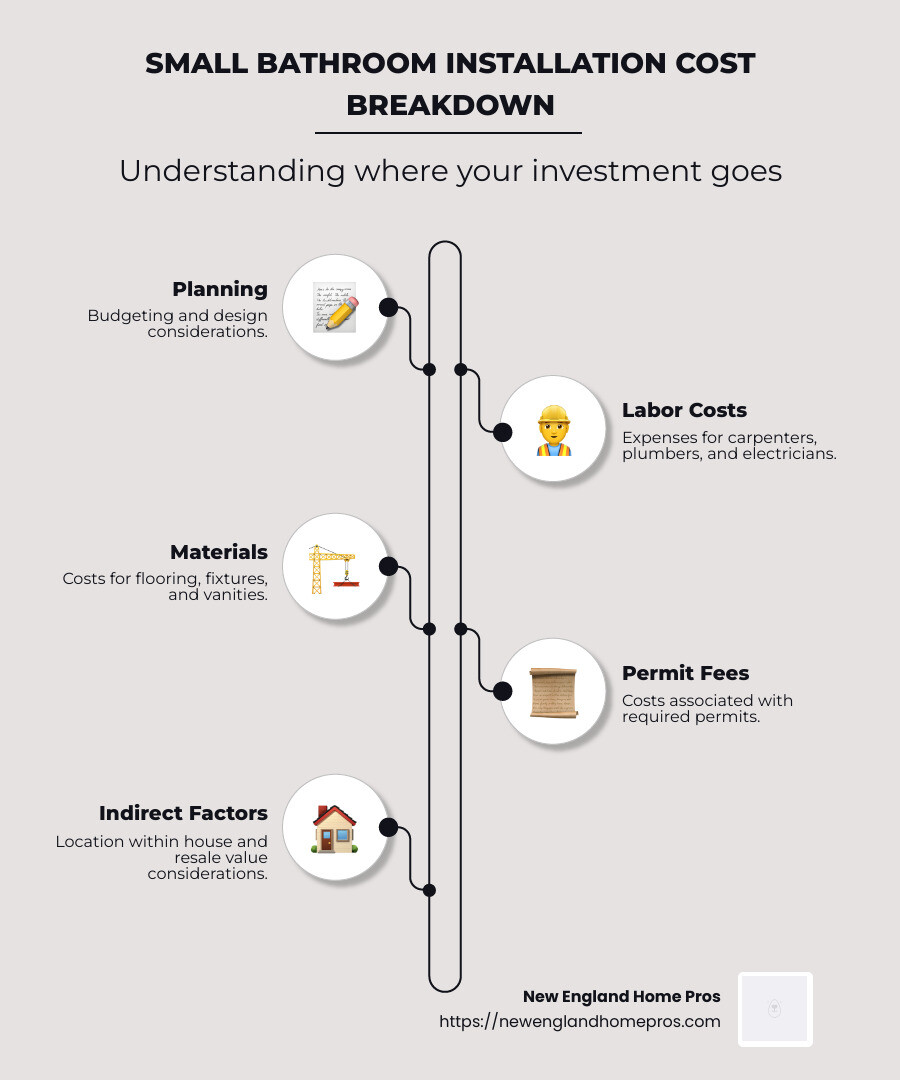
Small bathroom installation cost can often seem like an overwhelming prospect for homeowners, especially those considering an upgrade to improve both functionality and home value. The cost typically ranges from $5,000 to $15,000, with variations based on factors such as materials, size, and labor requirements. Planning and careful budgeting are essential to avoid unexpected expenses during the process.
Adding a small bathroom not only improves convenience but also increases property value, which can be crucial for families or those planning to sell their homes. It’s about finding the balance between cost-effectiveness and stylistic appeal. Homeowners must consider both direct costs, like fixtures and labor, and indirect influences, such as location within the house and potential permit fees, to arrive at an accurate budget.
I’m Jesse Andrews, owner of New England Home Pros, with over three decades of experience in home remodeling, specializing in kitchen and bathroom changes. My team and I are committed to simplifying small bathroom installation cost deliberations while ensuring high-quality, budget-friendly renovations. Let’s explore the factors influencing small bathroom installation costs further.
Related content about small bathroom installation cost:
– bathroom addition cost
– bathroom upgrade cost
– complete bathroom remodel cost
Average Cost of Small Bathroom Installation
Small bathroom installation cost can vary widely, but understanding the typical price range and influencing factors can help you budget effectively. Generally, the cost ranges from $5,000 to $15,000. However, this can fluctuate based on the type of bathroom, whether you’re converting an existing space or adding a new one, and the specific features you choose.
Conversion vs. New Addition
When considering a small bathroom, deciding between converting an existing space or building a new addition is crucial. Converting an existing space, like a laundry room or closet, is often more cost-effective. This is because these areas may already have plumbing in place, reducing the need for extensive work. Conversion costs typically range from $4,000 to $8,750 for a small bathroom of 20 to 35 square feet.
On the other hand, adding a new bathroom as an addition involves more labor and materials, often doubling the cost. Expect to pay between $8,000 and $21,000 for a new addition of the same size. The higher cost is due to the need for new plumbing, electrical work, and structural changes.
Cost by Bathroom Type
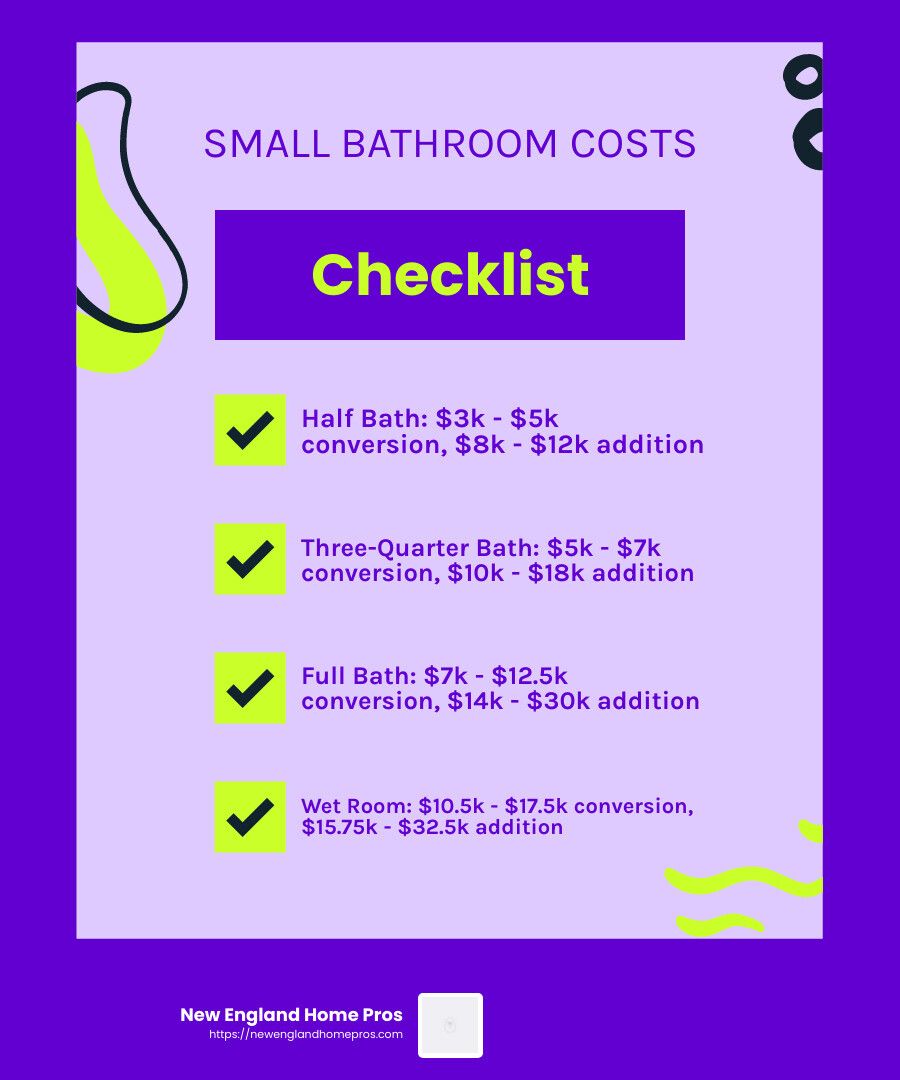
The type of bathroom you choose significantly impacts the cost. Here’s a breakdown of common small bathroom types:
- Half Bath: A half bath, or powder room, typically includes a toilet and sink. It’s the least expensive option, with conversion costs ranging from $3,000 to $5,000 and new addition costs from $8,000 to $12,000.
- Three-Quarter Bath: This includes a toilet, sink, and shower. It’s a bit more costly, with conversion prices between $5,000 and $7,000, and additions costing $10,000 to $18,000.
- Full Bathroom: A full bathroom features a toilet, sink, shower, and tub. Conversion costs range from $7,000 to $12,500, while a new addition might cost $14,000 to $30,000.
- Wet Room: This is a fully waterproofed space with a shower area that doesn’t require a separate enclosure. It’s a luxurious option, with conversion costs from $10,500 to $17,500 and additions ranging from $15,750 to $32,500.
Deciding on the right type depends on your budget, space availability, and personal needs. Each type has its unique benefits and challenges, so weigh these carefully against your budget and desired functionality.
Detailed Cost Breakdown
When planning a small bathroom installation, it’s important to consider various cost components. Labor, plumbing, electrical work, and materials each play a significant role in the overall expense.
Labor Costs
Hiring professionals is crucial for a successful bathroom installation. Here’s a breakdown of typical labor costs:
- Carpenter: $13–$39 per hour. They handle structural elements like framing and installing cabinets.
- Plumber: $45–$200 per hour. Plumbers are essential for installing pipes, fixtures, and ensuring proper drainage.
- Electrician: $50–$100 per hour. They manage electrical wiring and ensure all installations meet safety standards.
- General Contractor: Charges 10%–20% of the overall project cost. They coordinate the entire project, ensuring everything stays on track.
Hiring the right professionals ensures quality work, but it’s also a significant part of the small bathroom installation cost. It’s wise to get estimates from multiple contractors to find a balance between cost and quality.
Plumbing and Electrical Costs
Plumbing installation is a major cost factor, especially if you’re adding new pipes or relocating fixtures. Expect to pay more if your bathroom is far from existing plumbing lines. Similarly, electrical wiring costs can add up, particularly if your bathroom requires new circuits or outlets.
Permits are another consideration. Any project involving plumbing or electrical work typically requires permits, which can cost a few hundred dollars depending on your location. Always check with your local permit office to ensure compliance with regulations.
Material Costs
The choice of materials greatly affects the overall cost. Here’s a look at some common materials and their cost implications:
- Flooring: Options range from budget-friendly vinyl to luxurious natural stone. Vinyl is cost-effective and durable, while stone adds elegance but at a higher price.
- Fixtures: Sinks, toilets, and showerheads come in various styles and price points. Choosing mid-range fixtures can balance cost and durability.
- Vanities and Countertops: These can vary widely in cost. Prefabricated units are generally cheaper than custom-built options. Consider materials like laminate for a budget-friendly choice, or quartz for a more upscale look.
Balancing material quality with budget is key. While it’s tempting to choose high-end materials, there are many affordable options that offer both style and durability.
By understanding these cost components, you can better plan and budget for your small bathroom installation. This breakdown helps ensure you’re prepared for the various expenses involved, from labor and permits to materials and fixtures.
Cost by Bathroom Size
When planning a small bathroom installation, understanding costs by size can help you budget effectively. Whether you’re converting an existing space or adding a new one, the size of your bathroom plays a significant role in determining costs.
Small Bathroom (20-35 sq. ft.)
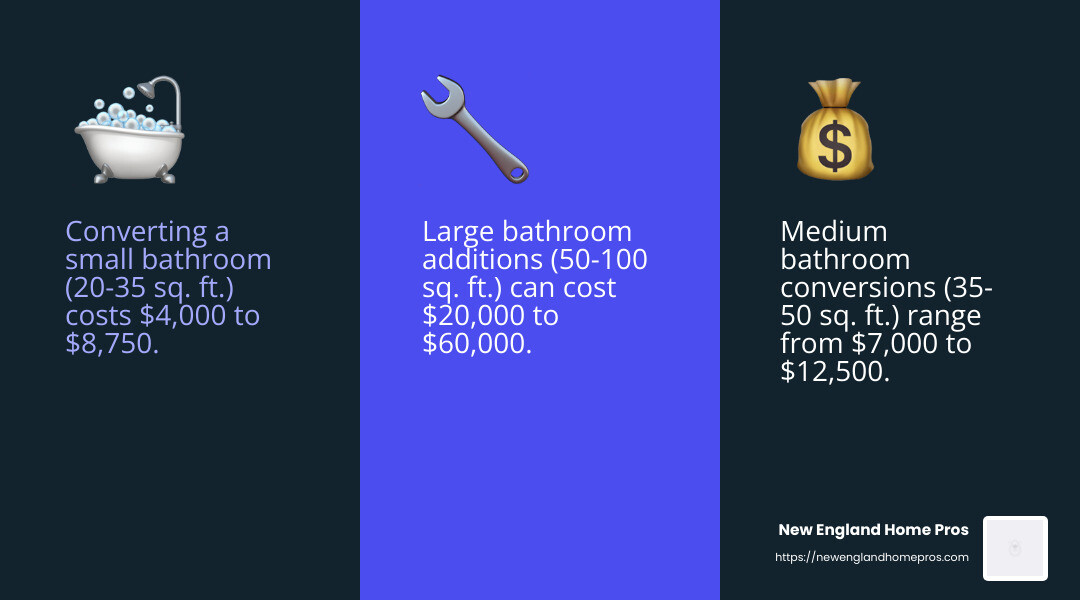
Conversion Cost: Converting an existing space into a small bathroom typically costs between $4,000 and $8,750. This cost includes basic features like a toilet and sink, and possibly a compact shower.
Addition Cost: Building a new small bathroom addition can range from $8,000 to $21,000. This cost is higher due to the need for new plumbing, electrical work, and structural changes.
Typical Features: Small bathrooms often include a toilet, a small vanity, and a shower or bathtub. Space-saving features like corner sinks and wall-mounted toilets can maximize available space.
Medium Bathroom (35-50 sq. ft.)
Conversion Cost: For a medium-sized bathroom conversion, expect to pay between $7,000 and $12,500. This size allows for more amenities, such as a larger vanity or a separate shower and tub.
Addition Cost: If you’re adding a medium bathroom, costs can range from $14,000 to $30,000. This includes more extensive plumbing and electrical work, as well as potential structural modifications.
Typical Features: Medium bathrooms can accommodate a shower-tub combo, a double vanity, and additional storage options. These features add convenience and functionality, making the space more versatile.
Large Bathroom (50-100 sq. ft.)
Conversion Cost: Converting a large space into a bathroom costs between $10,000 and $25,000. This range allows for high-end fixtures and more luxurious features.
Addition Cost: Building a new large bathroom addition can cost from $20,000 to $60,000. These projects often require significant structural work and extensive plumbing and electrical installations.
Typical Features: Large bathrooms may include a separate shower and bathtub, double vanities, and additional luxury features like heated floors or a bidet. These bathrooms offer a spa-like experience with ample space for relaxation.
Understanding the cost per square foot helps you plan your project more efficiently. Whether you opt for a small, medium, or large bathroom, knowing the potential expenses ensures you make informed decisions about features and materials. This knowledge is crucial in managing the overall small bathroom installation cost and achieving your desired results.
Cost by Location in the Home
The location of your small bathroom can greatly affect installation costs. Each area in your home offers unique challenges and opportunities, impacting plumbing, electrical work, and structural changes.
Upstairs Bathroom
Adding a bathroom upstairs often involves extending plumbing and electrical lines. This can be costly, as it requires careful planning and skilled labor. Plumbing extensions are necessary to ensure proper drainage and water supply, which can add to the expense. Additionally, structural changes may be needed to accommodate new fixtures and ensure the floor can support the added weight.
Despite these challenges, an upstairs bathroom offers convenience and privacy, especially in homes with multiple bedrooms on the upper floors. The cost for an upstairs bathroom can range from $7,000 to $12,500 for conversions, with new additions costing significantly more due to the complexity involved.
Laundry Room Conversion
Converting a laundry room into a bathroom can be one of the most cost-effective options. The presence of existing plumbing makes this transition smoother, reducing the need for extensive plumbing work. This can lead to significant cost savings compared to other locations.
Laundry room conversions typically cost between $7,200 and $9,800. Typical features include a toilet, sink, and shower, making efficient use of the available space. By utilizing the existing plumbing and electrical infrastructure, homeowners can achieve a functional bathroom with minimal disruption.
Attic and Garage Conversions
Turning an attic or garage into a bathroom involves more complex considerations. Both areas typically require insulation to ensure comfort and energy efficiency. Running plumbing and electrical work to these spaces can also be challenging, often requiring creative solutions to steer existing structures.
Attic conversions may need additional support to handle the weight of new fixtures. In garages, you might face challenges with temperature control and ventilation. Costs for these conversions can vary widely, with attics ranging from $8,000 to $20,000 and garages from $15,000 to $30,000. Despite the higher costs, these spaces offer the potential for unique and functional bathroom designs, adding value and versatility to your home.
Understanding these location-specific factors can help you make informed decisions about where to install your new bathroom. By considering existing plumbing, necessary structural changes, and potential cost savings, you can effectively manage your small bathroom installation cost and improve your home’s functionality.
Tips to Reduce Small Bathroom Installation Costs
Start with a Plan
Before you start on your small bathroom installation, planning is crucial. A well-thought-out design and budget can steer you clear of costly mistakes. Experts suggest setting aside 10% to 20% of your budget for unforeseen problems that may arise once construction begins. For instance, hidden water damage or outdated wiring can quickly inflate costs. By anticipating these issues, you can keep your project on track and within budget.
DIY Tasks
While adding a bathroom is generally not a DIY project, there are still tasks you can tackle to save money. Painting, tiling, and even demolition are areas where you might lend a hand. By doing some of the labor yourself, you can reduce the overall cost. However, be sure to know your limits—leave the more complex tasks like plumbing and electrical work to the professionals.
Material Choices
Your choice of materials can significantly impact the cost of your bathroom installation. Opt for synthetic materials like laminate or vinyl, which can mimic the look of more expensive options like wood or stone. These materials are not only budget-friendly but also offer long-term durability. Additionally, look for bulk discounts on materials. Buying in bulk can reduce costs, especially for items like tiles and fixtures.
Consider Resale Value
Even if you plan to stay in your home for years, it’s wise to think about resale value. A well-designed bathroom can improve your home’s market appeal. According to Remodeling magazine, adding a midrange bathroom has a return on investment of around 30.2%. While this is a drop from previous years, a functional and appealing bathroom can still add significant value. Focus on functionality and timeless design elements to attract future buyers.
By planning carefully, tackling some DIY tasks, selecting cost-effective materials, and considering resale value, you can effectively manage your small bathroom installation cost. These strategies will help you create a beautiful and functional space without breaking the bank.
Frequently Asked Questions about Small Bathroom Installation Cost
What is the cheapest way to add a bathroom?
The most cost-effective way to add a bathroom is to convert an existing space rather than building a new addition. Spaces like laundry rooms or closets, which often have existing plumbing, can minimize the need for extensive plumbing work. By utilizing existing structures and systems, you can significantly reduce labor and material costs. Additionally, opting for prefabricated fixtures and synthetic materials like vinyl or laminate can further lower expenses without sacrificing style or durability.
Do I need a permit to add a bathroom in my house?
Yes, you will likely need a permit to add a bathroom in your house. This is because adding or altering plumbing and electrical systems typically requires approval from local authorities. Permit requirements vary by city and state, so check with your local permit office. Obtaining the necessary permits ensures that your new bathroom complies with health, safety, and building codes. Expect to pay at least $100 for permitting, but this cost can vary based on your location and the scope of your project.
How much does it cost to add a bathroom in the basement?
Adding a bathroom in the basement can range from $10,000 to $15,000 or more, depending on several factors. The cost is influenced by the need to install new plumbing, especially if your basement lacks existing plumbing lines. Additional expenses may include pumping systems for wastewater, insulation, and ventilation to prevent moisture issues. If your basement already has plumbing or is located near existing plumbing, you can save on these costs. That basement bathrooms often require specialized fixtures and materials to withstand moisture, which can impact the overall budget.
Conclusion
Adding a small bathroom to your home can improve both functionality and value. Understanding the small bathroom installation cost is crucial for making informed decisions. Whether you’re converting an existing space or building a new addition, careful planning and budgeting are key to a successful project.
New England Home Pros is here to help you steer the complexities of bathroom installation. With our expertise in bathroom remodeling, we ensure that every detail, from design to execution, meets your needs and budget. Our team is committed to delivering high-quality results that stand the test of time. For more information on our services, visit our bathroom remodeling page.
Final Tips:
- Plan Thoroughly: Start with a clear design and budget. Allocate extra funds for unexpected issues that may arise during the project.
- Consider DIY Tasks: While professional help is essential for plumbing and electrical work, tasks like painting or basic tiling can be DIY to save costs.
- Choose Materials Wisely: Opt for durable yet affordable materials to balance cost and quality. Synthetic materials like vinyl can mimic the look of more expensive options without breaking the bank.
- Think Long-Term: Although cost-saving is important, consider the resale value and functionality of your new bathroom. A well-designed bathroom can be a significant asset if you decide to sell your home.
With these insights and the expert services of New England Home Pros, your small bathroom project can be both affordable and rewarding.
