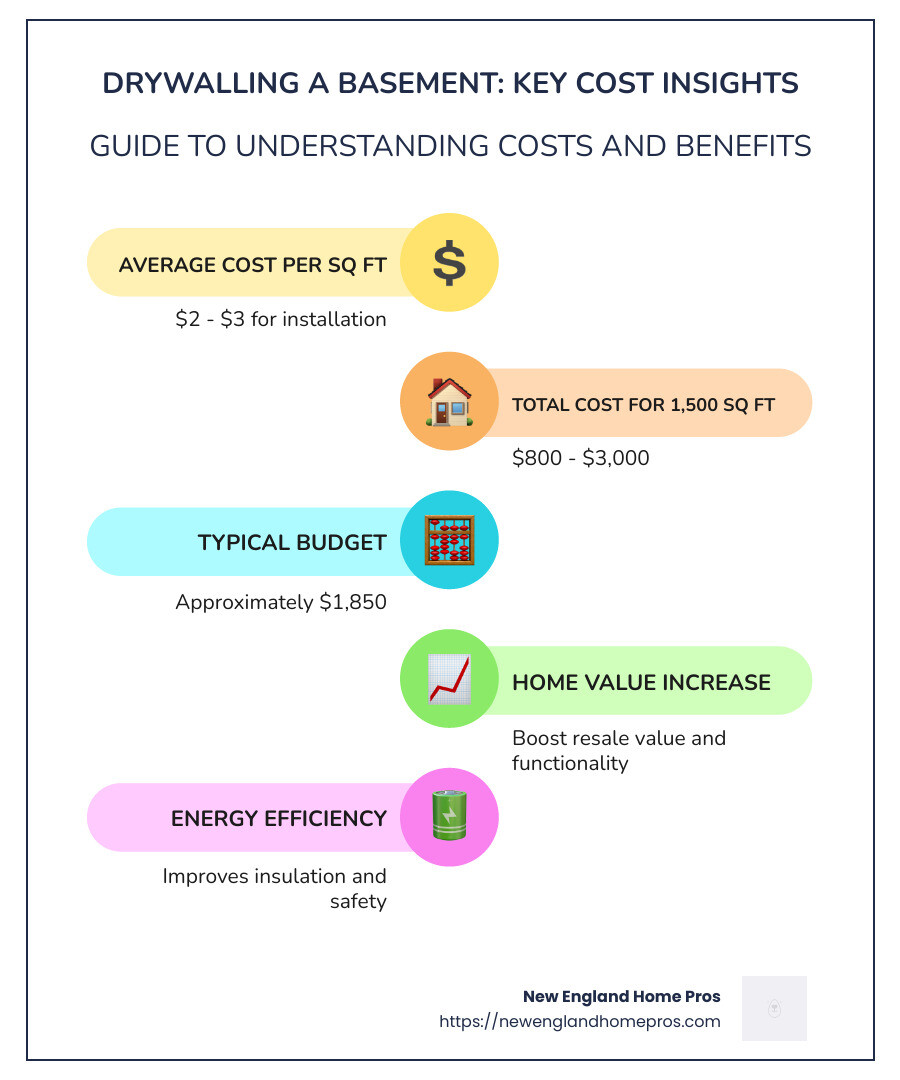
Cost to drywall basement projects can vary, but understanding the factors involved can help you budget effectively. Here’s a quick breakdown:
- Average Cost per Square Foot: $2 to $3
- Total Cost for 1,500 sq ft: $800 to $3,000
- Typical Budget: Around $1,850
Navigating drywall installation might seem daunting, but changing your basement can significantly improve your home’s value and functionality. Whether you’re looking to add living space or simply increase your property’s market appeal, drywalling your basement is a valuable investment. A finished basement offers increased square footage, potentially elevating your home’s resale value. Moreover, it provides potential uses like a children’s playroom, home office, or rental income suite—all while improving energy efficiency and safety.
I’m Jesse Andrews, owner of New England Home Pros. With over 30 years in the remodeling industry, including experience in basement renovations, I’ve guided countless homeowners through the complexities of projects like understanding the cost to drywall basement. Let’s dig deeper, ensuring your basement change is seamless and cost-effective.
Glossary for cost to drywall basement:
– basement completion cost
– cost to finish 500 sq ft basement
– diy finish basement
Factors Affecting the Cost to Drywall a Basement
When considering the cost to drywall a basement, several factors come into play. Understanding these can help you make informed decisions and keep your project within budget.
Material Costs
The materials you choose significantly influence the overall cost. Drywall sheets are the primary component, with prices ranging depending on thickness and type. Typical costs can be around $2 per square foot.
Other materials include:
- Insulation: Essential for energy efficiency, with costs ranging from $1.50 to $5 per square foot depending on the type.
- Fasteners and Seam Tape: These small items add up, especially for large spaces.
- Corner Beads and Topping Compound: Necessary for finishing edges and seams to achieve a smooth finish.
Choosing midrange materials can balance cost and durability, ensuring you don’t overspend or compromise quality.
Labor Costs
Labor is often the largest expense, accounting for about 40% of the total cost. Professional drywall installers charge based on tasks like:
- Hanging: Installing the drywall sheets onto the walls.
- Mudding and Sanding: Applying and smoothing the joint compound for a seamless look.
Rates vary by location and complexity. In New Hampshire, for example, expect to pay between $2 and $3 per square foot. DIY options can reduce labor costs, but require time and skill.
Additional Costs
Beyond materials and labor, other factors can affect the overall expense:
- Waterproofing: A crucial step to prevent moisture damage, especially in basements.
- Framing: If you plan to partition the space, framing costs can add up, ranging from $7 to $16 per linear foot.
- Painting and Flooring: These finishing touches can range widely in cost based on material and square footage.
- Permits and Debris Disposal: Ensure compliance with local regulations and budget for waste management.
Basement size, location, and project complexity also play significant roles in determining costs. Larger basements require more materials and labor, while complex designs or challenging layouts can increase expenses. By carefully considering each factor, you can effectively manage the cost to drywall your basement and achieve a beautiful, functional space.
Cost Breakdown for Drywalling a Basement
Average Costs
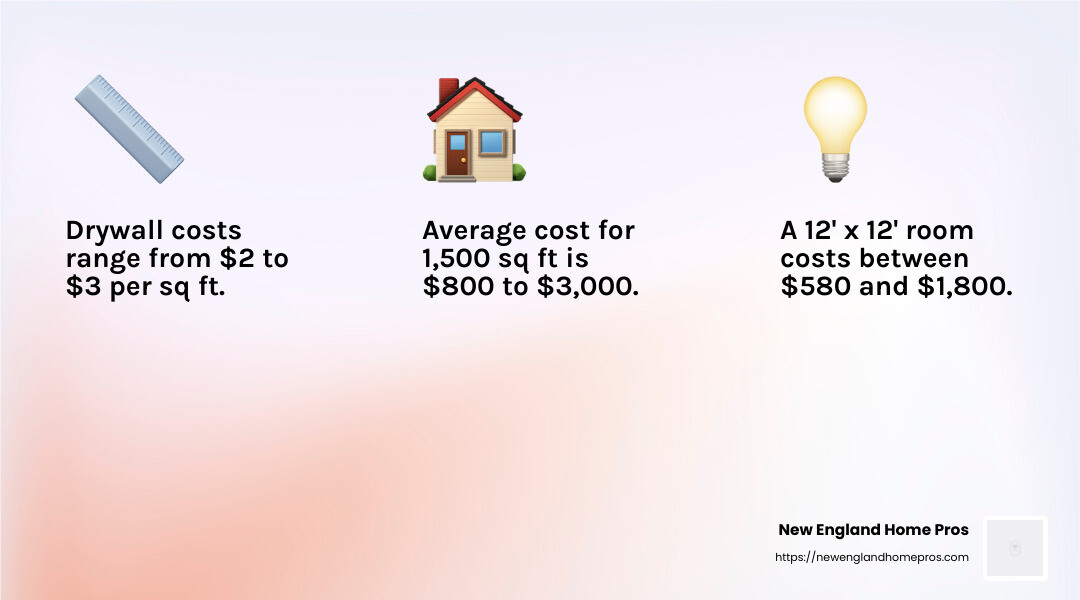
When planning to drywall a basement, it’s crucial to have a clear understanding of the average costs involved. Generally, drywall installation costs range from $2 to $3 per square foot. This means for a 1,500 square foot basement, you could expect to pay between $800 and $3,000.
In some cases, like in Missouri, the cost might be slightly higher due to specific requirements or finishes. For instance, one homeowner paid $5,500 for a 1,600 square foot basement, averaging $3.44 per square foot. This included delivery, installation, mudding, sanding, and a basic cleanup.
Cost Per Square Foot
Breaking it down further, the cost per square foot can vary based on several factors, including the complexity of the job and local labor rates. On average, you might see prices:
- $2.06 to $2.43 per square foot for straightforward installations.
- $1.40 to $2.35 per square foot for projects with fewer complexities or DIY elements.
These figures can help you estimate costs more accurately based on your basement’s dimensions and specific needs.
Cost Per Room
If you’re considering the cost to drywall specific rooms within your basement, here’s a quick overview:
- A 12′ x 12′ room could cost anywhere from $580 to $1,800, depending on the level of finish and additional features.
- For a larger project, like a 2,000 square foot house, the cost might range from $8,000 to $30,000.
These estimates provide a general idea, but actual costs can vary based on your location and specific project requirements. Always consider getting multiple quotes to ensure you’re getting the best value for your investment.
Tips for Reducing Drywalling Costs
DIY Options
Taking on some tasks yourself can significantly cut down on expenses when drywalling your basement. Consider handling simpler tasks like painting the finished drywall, which can save you the cost of hiring a professional painter. Additionally, you might try your hand at simple flooring installations, such as laying down laminate or vinyl tiles. These materials are often easier to work with and can be installed with minimal tools.
Trim installation and decorating are other areas where you can DIY. Installing baseboards and crown molding can be a straightforward task with the right tools and a little patience. Tiling is another option for those who are comfortable with more hands-on work, especially in areas like a basement bathroom or kitchenette.
Material Choices
Choosing the right materials is crucial for balancing cost and quality. Opt for midrange materials that offer durability without breaking the bank. You can often find floor models or lower-cost options at home improvement stores, which can provide significant savings.
When purchasing drywall, consider the size and type that best fits your needs and budget. While you might be tempted to go for the cheapest option, balance between cost and durability is key to avoiding frequent repairs or replacements.
Open Floor Plans
An open floor plan can be a cost-effective design choice for your basement. By minimizing the number of walls, you reduce the need for additional framing, drywall, and insulation, which can lead to substantial savings. This approach not only lowers material costs but also creates a spacious and versatile area that can adapt to various uses over time.
Existing Plumbing and Electrical Lines
Utilizing existing plumbing and electrical lines is an effective way to keep costs down. The expense of rerouting these systems can be one of the most significant in a basement finishing project. By designing your space around the current layout, you can avoid these additional costs and maintain a more manageable budget.
Incorporating these strategies can help you achieve a beautifully finished basement without overspending. By carefully selecting which tasks to DIY, choosing cost-effective materials, and making smart design choices, you can create a functional and appealing space that meets your needs and budget.
Frequently Asked Questions about Drywalling a Basement
What is the most expensive part of finishing a basement?
When finishing a basement, labor often accounts for the largest chunk of expenses, making up about 40% of the total cost. Within this, plumbing and electrical work are usually the most costly segments. Licensed professionals are required for these tasks, and their rates can significantly impact your budget.
Materials also contribute heavily to the cost. Lumber for framing, insulation, and drywall are essential components that add up quickly. For instance, drywall alone can cost between $2 and $3 per square foot, depending on the quality and finish you choose.
Is finishing a basement worth the money?
Finishing a basement can be a wise investment. It not only adds extra livable square footage to your home but also improves its resale value. Many homeowners see a good return on investment from this renovation, especially in markets where additional living space is highly valued.
A finished basement can also offer other benefits, such as improved energy efficiency and potential rental income. By creating a comfortable and functional space, you might find that the initial investment pays off in multiple ways over time.
How much does it cost to drywall a basement DIY?
Taking the DIY route for drywalling can save money, but be prepared for the work involved. The cost to drywall a basement yourself typically ranges from $2 per square foot, which means for a 1,500-square-foot area, you’re looking at a cost of $800 to $3,000 just for materials.
This estimate doesn’t include tools or additional supplies you might need, such as seam tape, fasteners, and topping compound. While DIY can cut labor costs, it’s crucial to weigh these savings against the time and effort required to achieve a professional finish.
Conclusion
In summary, drywalling your basement is a significant investment that can transform your home by adding valuable living space. Whether you choose to hire professionals or tackle some aspects as a DIY project, understanding the costs involved is crucial. From material choices to labor expenses, each factor plays a role in the overall budget.
At New England Home Pros, we pride ourselves on delivering top-quality craftsmanship and ensuring customer satisfaction. Our team is dedicated to attention to detail, making sure every project meets your needs and expectations. We offer comprehensive basement finishing services, helping you create a space that is both functional and beautiful.
If you’re considering a basement remodel, trust New England Home Pros to guide you through the process with expertise and care. Our focus on customer satisfaction and quality work sets us apart in the home improvement industry.
For more information on how we can help you with your basement finishing project, visit our Basement Finishing Services page. Let us help you turn your basement into a space you’ll love and enjoy for years to come.